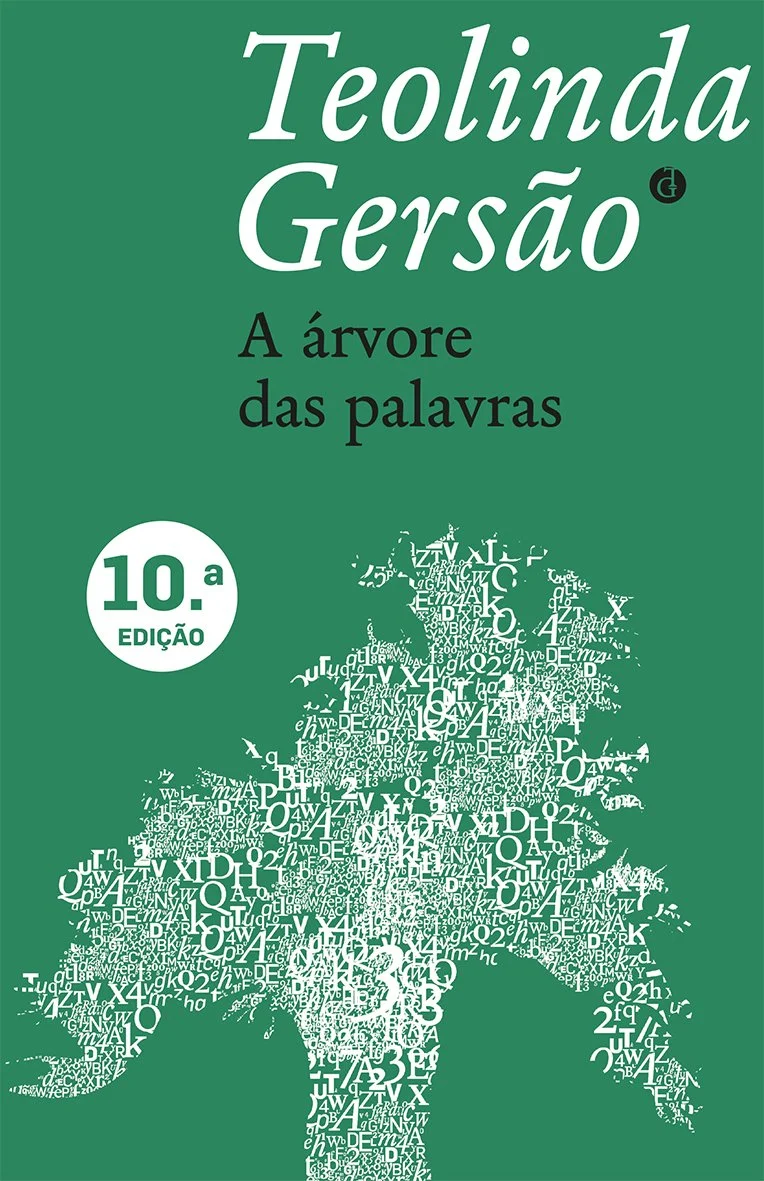
A árvore das palavras
A árvore das palavras é um retrato de Lourenço Marques, antes da guerra colonial e já depois do seu começo. É um livro sobre o fascínio de África e da cultura africana, sobre a mistura e o choque de culturas e também uma história perturbadora sobre o paraíso que se converte em pesadelo. Um livro mágico sobre a infância, à qual não se pode voltar, a não ser através do milagre da literatura.
«A árvore das palavras inscreve-se entre as grandes obras da ficção contemporânea.»
Fábio Lucas, O Primeiro de Janeiro
-
A Árvore das Palavras inscreve-se entre as grandes obras da ficção contemporânea.
FÁBIO LUCAS, O PRIMEIRO DE JANEIRO
Regresso a uma Lourenço Marques do tempo das colónias (…) sem qualquer espécie de saudosismo ou nostalgia colonialista, perpassa o olhar de quem conheceu e viveu esses tempos. (…) Sabe bem ler relatos como este, lúcidos, verdadeiros, sentidos, atentos.
PEDRO TEIXEIRA NEVES, SEMANÁRIO
Mestria narrativa, suprema arte da simplicidade. Lourenço Marques a emergir por magia, intacta do passado.
LINDA SANTOS COSTA, PÚBLICO
(O romance) evita uma visão europeia (e eurocêntrica) de África, e para não cair na tentação contrária, (… ) insiste nas imagens pluralizadas e mesmo fragmentárias de um espaço que não é um, mas vários, (…) estrutura-se a partir de discursos diversos e por vezes contraditórios.
Na nossa literatura, África parece ter sido um lugar relativamente vago. A Árvore das Palavras vem responder ao relativo défice a que tenho vindo a referir-me. A Árvore das Palavras é um romance a reter.
CARLOS REIS, JORNAL DE LETRAS
Uma narrativa de tensões cruzadas. Um belo depoimento de um mundo não totalmente findo e infinitamente sedutor.
ASSIS BRASIL, ZERO HORA
No romance de Teolinda, além dos conflitos, mas imiscuindo-se neles, está a força irresistível de suas palavras.
MARCELO PEN, FOLHA DE SÃO PAULO
Nos últimos anos surgiu um punhado de romances de tema moçambicano (…), mas talvez nenhum tão consequentemente político como A Árvore das Palavras de T.G. Quando um romance português chega à 6ª edição numa década, isso significa que tocou numa corda sensível.
PEDRO MEXIA, PÚBLICO, 2008
This is the only one of Teolinda Gersão´s 12 novels available in English, and it has just been chosen as the best novel translated from Portuguese in the last three years.
You can see why: it´s as acute about childhood as it is about adults, and the writing is as sensuous as it is sad.
Amélia has left Portugal for pre-independence Mozambique, escaping her family and a failed relationship. She answered a newspaper advert from a man who “seeks a decent young woman aged 25 max”. He promised her beaches with pale sand. She got a lonely life as a dressmaker instead. The section of the novel dedicated to her is the most moving in the book, a series of pin-sharp revelations of envy and isolation. She wants to join the elite, and buys perfume she can´t afford. In the sizzling African heat, she dreams of owning fur coats to give the world she left behind a slap in the face. As a portrait of a desperate colonial it´s worthy of V.S.Naipaul.
But Gersão does youthful exuberance as well as she does middle-aged desolation. Amélia´s daughter Gita experiences things, as children do, in a sensory cascade. “Yes, everything in the yard danced”, she says, “the leaves, the earth, the spots of sunlight, the branches, the trees, the shadows.” Hers is an open-hearted, child´s-eye view, of the kind that sees pain as clearly as pleasure. “Go away and never come back”, Gita says of her mother.
Amelia’s resentment is the worm in the apple. Gersão´s skill is to make the apple sweet and the worm sympathetic.
SIMON WILLIS, INTELLIGENT LIFE, March/April 2013
Salazar’s forty-year dictatorship in Portugal and that country’s colonial wars in Africa cast their long shadows over Teolinda Gersão’s The Word Tree.
ADRIAN TAHOURDIN, TIMES LITERARY SUPPLEMENT
Gersão's assured hand is evident throughout this convincing story of division. Mother and daughter, black and white, old and new worlds – the narrative perspective shifts effortlessly, returning each time to a fundamental question: why should anyone think they are worth more than anyone else?
SARAH GILMARTIN, THE IRISH TIMES
In The Word Tree, Gersão has created Gita, a post-colonial hybrid subject, who in many ways stands in direct opposition to her nation’s colonial images: She is female, she is poor, she is disinterested in power, and at the close of the novel, she voyages to Portugal for the first time, taking her love and admiration for Africa with her.
KAREN SOTELINO, REVISTA DE LETRAS
The Word Tree is an atmospheric novel, which evokes a time and a place in impressive detail. Gita’s thoughts, as she embarks for Lisbon, speak to the memories of many who, like her, identified more with the land of their birth than they did with that from where their parents had originally migrated, a mother country they had only heard about: “The world that I’m leaving behind. Rivers, plantations, savannahs, palm groves, wide open spaces, broad horizons, and a tree that used to grow in my dreams and that reached up to the sky – what do they know of all that, how can they understand?”
DAVID BROOKSHAW, LUSO BRAZILIEN STUDIES
Before reading Teolinda Gersão’s vivid evocation of a girl’s coming-of-age in Africa, I knew little about the history of Mozambique, its Portuguese colonisers, the crushing poverty and its fight for independence. Gersão’s achievement is to use the personal stories of one family to shed light on Mozambique’s troubled past and the immigrant experience in Africa.
LUCY POPESCU, PURGE REVIEW
A return to Lourenço Marques in colonial times (…) without any kind of longing or colonial nostalgia, but through the gaze of someone who knew and lived those years. (…) It is a real pleasure to read accounts like this one: lucid, truthful, deeply felt, attentive.
PEDRO TEIXEIRA NEVES, SEMANÁRIO
Narrative mastery, the supreme art of simplicity. Lourenço Marques emerging as if by magic, intact from the past.
LINDA SANTOS COSTA, PÚBLICO
The novel avoids a European (and Eurocentric) view of Africa and, so as not to fall into the opposite temptation, (…) insists on plural, even fragmentary images of a space that is not one, but many, (…) structuring itself through diverse and at times contradictory discourses.
In our literature, Africa has tended to be a relatively vague place. The Word Tree responds to the deficit I have been pointing out. The Word Tree is a novel to be remembered.
CARLOS REIS, JORNAL DE LETRAS
A narrative of crossed tensions. A beautiful testimony to a world not entirely gone and infinitely seductive.
ASSIS BRASIL, ZERO HORA
In Teolinda’s novel, beyond the conflicts – yet thoroughly intertwined with them – lies the irresistible power of her words.
MARCELO PEN, FOLHA DE SÃO PAULO
In recent years a handful of novels with Mozambican themes has appeared (…), but perhaps none as consistently political as T.G.’s The Word Tree . When a Portuguese novel reaches a sixth edition in a single decade, it means it has struck a sensitive chord.
PEDRO MEXIA, PÚBLICO
“L’albero delle parole è il racconto poetico, quasi onirico, della crescita di Gita tra rapporti familiari complessi e differenze coloniali.”
ALESSANDRA FONTANA, LA LETTRICE CONTROCORRENTE
“Per affrontare questa tripartizione, Gersão mette in campo una lingua costantemente in divenire, che si trasforma a seconda del punto di vista della narrazione.”FLAVIA MARTINO, GUFETTO PRESS“Anche Gita reclama la sua indipendenza, come il Mozambico che l’ha vista nascere…”
TANIA TONIN, PULP MAGAZINE“Le parole, nel romanzo, sono spesso difficili: taciute, fraintese, cariche di conflitto. Eppure sono anche ciò che permette di mettere radici, di costruire un senso, di riconoscere la propria storia.”
ANGELO FAZARI, DALLA CARTA ALLO SCHERMO“La lectura de El árbol de las palabras… es una verdadera ‘filosofía de la memoria’…”
Marifé Santiago Bolaños
-
Inglês, Espanhol, Italiano
The Word Tree, Dedalus, UK, 2010 , transl. Margaret Jull Costa
L’albero delle parole, translated by Chiara Rodella, Voland, 2025El Árbol de las Palabras, transl. María Tecla Portela Carreiro, Barcelona, El Cobre Ediciones, 2003